














Logo

Rocketplay Casino Review In Italy

2026 Analysis for adult users in Italy: account, payments, games, pace and exit read with more criteria.

Fortune Gems 2 Slot

Table of Contents

  • The Dog House Megaways Slot
  • Lucky Joker 10 Extra Gifts Slot
  • Sword of Ares Slot
  • Floating Dragon Hold & Spin Slot
  • Leprechaun Riches Slot
  • Fruit Cocktail Slot
  • The Dog House Megaways Slot
  • Sword of Ares Slot
  • Fruit Million Slot
  • The Dog House Megaways Slot
  • Big Fisherman Slot
  • Big Fisherman Slot
  • Seven Books Unlimited Slot
  • RocketPlay Fortune Slot
  • Sword of Ares Slot
  • Floating Dragon Hold & Spin Slot
  • 9 Mad Hats Slot
  • Floating Dragon Hold & Spin Slot
  • Big Bass Splash Slot
Reviews 1

First Look At The Platform In 2026

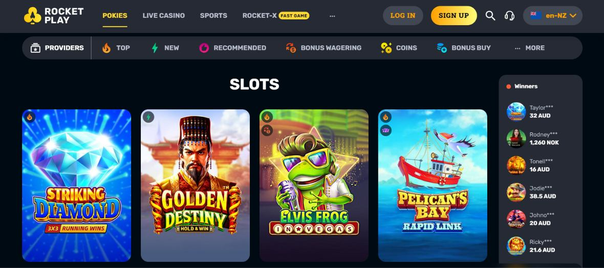
A gaming platform cannot be properly evaluated in ten seconds. The first impression can say something, but not enough. What really counts is the real journey the player takes: opening the account, reading the menu, accessing the balance, choosing the format, checking limits, contacting support, and closing the session. On the RocketPlay website, areas like Casino, Slots, and Live Casino are immediately visible, as well as the option to select Italian among the languages shown in the interface. This alone is not enough to define everything, but it is a useful starting point for those who want to orient themselves more methodically.

Imagine an evening after work, with less than an hour free and little desire to waste time on confusing steps. At that moment, you don't need a platform that just looks fast. You need a platform that is easy to read. If the menu is clear, the balance is understandable, and the fundamental steps are identified without chasing buttons everywhere, the session starts with a real advantage. If, on the other hand, everything appears too compressed, the risk is starting to click before you've really decided what to do.

Often the initial mistake is precisely this: mistaking speed for quality. In reality, when everything is immediate, the player must become even more intentional. A good initial read is not about enthusiasm. It's about control.

What Do The Most Attentive Users Look At

The most cautious users usually don't start with the games. They start with the structure. They look at where the profile is, how to access the wallet, if the steps seem linear, if support appears reachable, and if there are dedicated areas for limits or practical information. Imagine entering from your phone during a short break. If in a few seconds you don't understand where to go to read the situation clearly, the platform has already started guiding you, instead of the other way around.

This doesn't mean complicating your life. It means avoiding the kind of superficiality that weighs more later. Those who start by observing the path often make cleaner decisions in the payment and exit phases as well.

Why First Impressions Can Be Deceiving

A platform might seem orderly just because everything is well-colored or arranged with apparent logic. But the real test is different: what happens when the user wants to stop, check the balance, or review their account? Imagine a short session that quickly changes tone. At that moment, the interface should no longer be judged as a showcase. It should be judged as a tool.

Many users realize too late that the difference between an elegant environment and a useful environment is not always the same thing. The useful environment is the one that leaves room for your method, not the one that pushes you to follow its rhythm.
customer feedback 2

Registration, Account & Initial Budget

Registration should be straightforward, but not hasty. A well-opened account doesn't make news, but it avoids many problems. Entering data, rereading it once, and moving on only when everything is consistent remains the most sensible sequence. Many people treat this phase as a technical step to be closed quickly. Then they discover that a part of the subsequent disorder originates precisely there.

Imagine creating your profile while doing something else, perhaps from your phone, amidst messages and notifications. A misspelled name, a careless date, or a detail inconsistent with the payment method don't seem important at the moment. However, they usually resurface when the session has already started or when you want to move more linearly. And in that context, even a small detail weighs more.

The initial budget deserves the same attention. The useful question is not just how much you can deposit, but how much truly belongs to that session. Not to the entire weekend. Not to a vague idea of entertainment. Specifically to that moment. The most organized users often mentally divide money into three blocks: what's for the session, what's for daily life, and what they don't want to touch. It's a simple habit, but it greatly reduces impulsive occurrences.

How to Avoid Errors During the Access Phase

The best way to avoid errors is not to become slow, but to become clear. Imagine a user who wants to log in immediately and thinks of correcting details later. In practice, that 'later' almost always comes at a worse time, when there's more haste or less patience. It's much better to do a clean check at the beginning, when the mind is still outside the actual session.

The context in which you open the account also matters. If you are tired or distracted, the margin for error increases. An account created in a calm moment is more helpful than a procedure done in a hurry.

Games, Catalog & Session Pace

A large catalog can be useful or tiring. It depends on how you approach it. The first mistake is believing that exploring means opening as many titles as possible in a short time. In reality, when a user frequently changes games, categories, or formats, they are usually not comparing well. They are reacting to stimuli. This makes it harder to read the balance and easier to lose the sense of the session.

3 reviews

Imagine an evening with little mental energy but a desire to distract yourself a bit. In that context, a too intense or too noisy format can tire you out before you have fun. On another evening, with more patience and more time, the same choice might be perfectly fine. Therefore, the best decision doesn't come from the question 'what is the best game?'. It comes from the question 'what kind of pace can I sustain today?'.

Many adults find it useful to choose the session's tone first, then the title. If they want something simple, they reduce the complexity. If they are looking for a more active experience, they often shorten the time or lower the expected spending. This small order prevents the catalog from dictating the path.

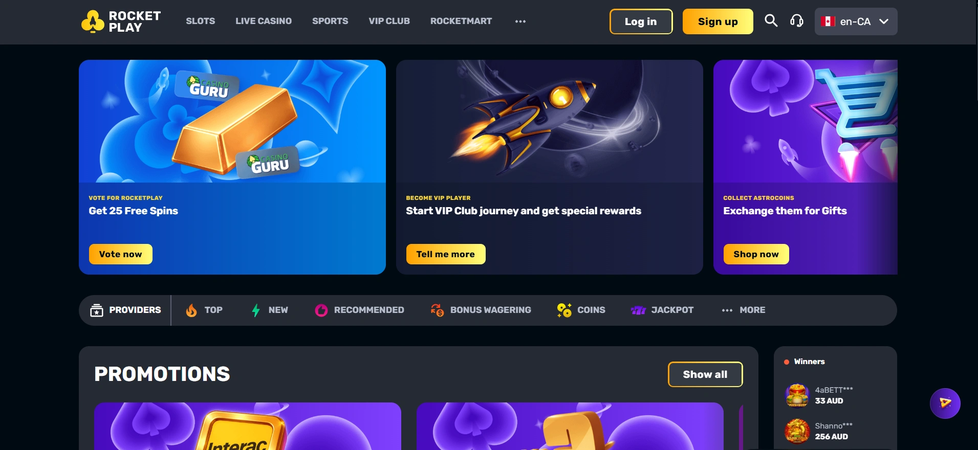
The site also shows promotions, tournaments, a VIP section, and areas related to live games, suggesting an environment designed to hold attention in various ways. Precisely for this reason, the initial selection becomes even more important: when there are many possible directions, choosing poorly at the beginning weighs more.

Payments, Cashier & Session Closure

Payments should not be viewed solely as entry. Exit is also part of the same mental area. Many users arrive at the cashier with a fairly clear plan of how much they want to put in initially, but without having decided how they will close the evening. This gap seems small. In reality, it is one of the points where the session unravels most easily.

Imagine an evening that starts better than expected. The balance rises, the mood improves, and temptation becomes simple: a little more, then I'll leave. If there is no exit rule, that 'then' keeps shifting. If, however, the rule was defined beforehand, the next step is much more readable. There's no need to negotiate everything at the most emotional moment.

On the RocketPlay site, various deposit options appear, along with minimum and maximum limits and a section dedicated to payment methods, confirming that the financial part is designed as a structured area and not an accessory. This alone does not guarantee good use, but it helps to view the platform as an environment where account, balance, and money movement should be handled methodically.

Area To Check

What Is Worth Doing

Why It's Useful

Profile Data

Verify Them Before Using The Cashier

Reduces Errors And Corrections Afterwards

Initial Amount

Link it to a specific session

Avoids expenses being more flexible than expected

Payment Method

Choose an option already included

Limits doubts during the operational phase

Exit Rule

Decide it before playing

Helps to close without negotiations

Support

Write clearly and completely

Reduces confusion and repeated attempts

The table is not meant to complicate management. It does the opposite. It transforms abstract decisions into very practical actions. And when the actions are clear, the entire relationship with money on the platform becomes less impulsive.

How to Read the Cashier Without Letting Yourself Be Guided

The cashier should open with a purpose and close as soon as that purpose is concluded. Imagine a user entering that area multiple times, just because the session is changing mood. At that point, the wallet is no longer a technical function. It is becoming an emotional response. And this usually complicates everything.

The most cautious players do something very simple: they avoid using the cashier as a session thermometer. They only use it when it's really needed.

When to Think About Withdrawal

Thinking about it only at the end is often too late. Imagine a user who reaches a good point in the evening and decides on the spot whether to slow down, close, or continue. If there is no pre-made rule, the decision risks following adrenaline. It is much better to include the exit in the initial plan, as part of the session and not as an improvised finale.

This does not mean turning everything into cold mechanics. It just means removing the power from the most emotional moment to change the entire path on its own.

How to Write to Support Usefully

Support is more effective when the user does not arrive already confused. Imagine a screen that does not update as you expected. You can repeat the same action multiple times or stop and describe the problem precisely. Usually, the second path is much more useful.

Device, approximate time, step taken, and result seen. These four things help more than a series of quick attempts. Clarity also lowers frustration, and frustration is always a bad advisor.

Perceived Security, Method, and Personal Control

Many people look for a quick answer about the "seriousness" of a platform. It is an understandable question, but often asked in the wrong way. In practice, the perception of reliability does not arise from a single piece of information. It arises from the consistency between account, payments, support, clarity of rules, and tools that allow the player to maintain their method.

Imagine wanting to understand if a platform really lets you play with order. The question is not just whether you like it or if the interface looks professional. The more useful question is: does it help me stay clear-headed when my mood changes? If the answer is yes, then the ground is more manageable. If the answer is no, even an elegant environment can quickly become tiring.

RocketPlay also shows welcome bonuses, cashback, recurring promotions, and a VIP club, as well as a call to responsible gaming tools in the descriptive part of the site. This makes personal control even more important, because the more incentives there are, the more a user needs to know where their plan ends and the platform's push begins.

How to Use Limits Without Waiting for the Problem

Many users activate limits or breaks only when they notice that something is already out of proportion. In reality, these tools work better much earlier. Imagine a difficult week, little patience, and the desire to use gaming to disconnect. Precisely in that context, a pre-set rule has more value.

A deposit limit, a short break, or a simple decision on the maximum number of re-entries can change a lot. Not because the player is weak, but because the mobile and fast interfaces reduce the distance between intention and action.

Why Personal Control Matters More Than Speed

A platform can be orderly, have a good menu, and various tools. But if the user enters without a perimeter, the experience still gets complicated. Imagine two people with the same balance and the same time available. One enters without a plan, often changes their mind, and lets the flow of the moment decide. The other enters with time, amount, and exit already clear. The final difference rarely depends solely on chance.

In 2026, with increasingly fluid platforms, the real advantage is not being able to do everything quickly. It is being able to do only what you decided to do.

Final Evaluation for Users in Italy

For an adult user in Italy, RocketPlay can be read usefully not by asking if it seems "perfect", but if it allows for readable use. The site also shows an interface in Italian and presents clear areas such as games, live casino, promotions, tournaments, and payments. This creates a rich environment, but for this very reason, it requires more intentional selection from the user.

If the platform is used with an orderly account, a real budget, an exit rule, and a limited number of game changes, the journey can be much more manageable. If, on the other hand, the user leaves everything open to the moment, the richness of the catalog and incentives risks turning into dispersion. The difference does not arise from a single function. It arises from the combination of the site's structure and personal method.

This is the decisive point of the 2026 evaluation: it is not enough for the platform to be accessible or rich. It must remain readable when time is short, the phone is full of stimuli, and the session changes tone. If you manage this, the experience truly improves.

FAQ

When a person asks this question, they are essentially asking if the platform allows them to play with a clear structure and without too many confusing signals. The useful answer does not come from a slogan, but from the combination of account, cashier, support, clarity of rules, and control tools. If the path helps you stay clear-headed when your mood changes, the perception of reliability grows. If, on the other hand, everything pushes you to act quickly, even a well-presented site can be more difficult to manage.

Before thinking about exiting the balance, it is worth checking three things: consistency of profile data, clarity of the method used, and the presence of a clear end-of-session decision. Many users do not encounter difficulties because a function is missing, but because they arrive at this moment with too much improvisation behind them. A clean process makes everything more readable, while a confused process tends to complicate even the simplest operations.

The cleanest way is to decide the amount, time, and exit rule beforehand. Many people do the opposite: they enter, look at the games, go through the cashier, and only then try to build a limit. This usually leads to constant corrections. When, however, the perimeter exists from the beginning, each subsequent step costs less mental energy.

Profile, context, and objective of the session. If you don't yet know how much you want to use or why you want to enter right now, it's probably not the right time to go to the cashier. The first deposit works best when it concludes a clear preparation, not when it opens a chain of improvised decisions.

You usually realize it when no title stays open long enough to really show you its rhythm. If you constantly open, close, and change, you are no longer comparing critically. You are just reacting. A good corrective measure is to choose a few initial options and give each one the necessary time to be read calmly.

When you realize that stepping out for a few minutes is not enough to stop the inertia. If you return immediately or if you repeatedly extend an already concluded session, a break can be very useful. You don't have to wait for a serious moment. It often works better precisely when you use it in advance, as a practical barrier and not as a last defense.

The most frequent mistake is starting without structure. The person opens their phone, logs in, checks their balance, changes games, and finds themselves in a session they hadn't really defined. Everything seems light, but it is precisely this apparent lightness that makes it harder to notice how much time or money they are using.

EN