













Logo

Rocketplay Casino Promo Codes In Italy

For adult players in Italy, this 2026 overview explains how to manage offers, accounts, and sessions more wisely.

Fortune Gems 2 Slot

Table of Contents

  • The Dog House Megaways Slot
  • Lucky Joker 10 Extra Gifts Slot
  • Sword of Ares Slot
  • Floating Dragon Hold & Spin Slot
  • Leprechaun Riches Slot
  • Fruit Cocktail Slot
  • The Dog House Megaways Slot
  • Sword of Ares Slot
  • Fruit Million Slot
  • The Dog House Megaways Slot
  • Big Fisherman Slot
  • Big Fisherman Slot
  • Seven Books Unlimited Slot
  • RocketPlay Fortune Slot
  • Sword of Ares Slot
  • Floating Dragon Hold & Spin Slot
  • 9 Mad Hats Slot
  • Floating Dragon Hold & Spin Slot
  • Big Bass Splash Slot

Rocketplay Promo And First Approach

The first contact with a gaming platform matters more than it seems. Not because everything is decided in those minutes, but because there you immediately understand if the account is readable, if the cashier is found effortlessly, and if the menus really help you orient yourself. When the main steps are clear, the rest of the experience weighs less. On the other hand, when you already have to guess where to click at the beginning, even a short visit can become more chaotic than necessary.

Promo 1

Imagine a simple situation. You come home, you have little time, and you just want to understand if the platform seems suitable for your pace. At that moment, you don't need a homepage full of stimuli. You need an environment that allows you to see your balance, find your history, understand where payments are, and calmly decide whether to proceed or not.

For those who usa the platform in Italy, this first impression is even more important because many visits originate from mobile and within an already busy day. The platform can be used by adult users in compliance with applicable rules and age limits, but real control is not provided by the brand. It is provided by the way the player enters, reads the context, and sets their own boundaries before starting.

How to Read The Offer Without Rushing

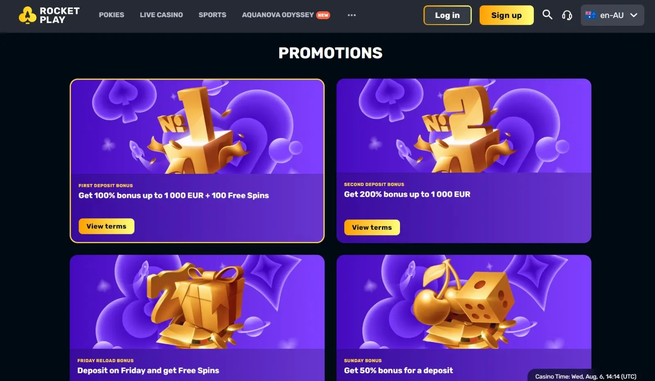
An initial promotion can be useful, but only if it doesn't shift your plan. If you enter with the idea of making a short visit and the first screen immediately induces you to speed up, it's best to stop and read more carefully. Imagine a user who opens the account just to orient themselves and finds themselves already thinking about the deposit before even understanding where limits, history, and profile are visible. In that case, they are not using the account wisely. They are letting the account dictate the pace.

Registration, Profile And First Settings

Registration is often treated as a formality to be completed quickly, but in practice, it's the point where the account takes shape. A poorly written address, a weak password, or a hastily entered piece of data rarely cause problems in the first minute. The problem arises later, when you need to recover access, verify your profile, or check a transaction you want to close smoothly.

promotional offer 2

Imagine filling out the form from the couch, with notifications active and the phone battery draining. It's a common scene, but also the perfect context for making small mistakes. The most useful choice is to slow down. It's better to spend two extra minutes at the beginning than to chase corrections right when you just want to log in, deposit, or withdraw.

Immediately after registration, it's advisable to do a quick technical tour of the account. It's not the most exciting part, but it's one of the most useful. See where the balance, history, payments, pause tools, and support are. If you find them quickly, you'll move better later, even in moments when the session's tone changes and you feel less inclined to search patiently.

Budget Choice Before the Cashier

The budget should not be formed in front of the payment screen. When you decide the amount with the cashier already open, the moment weighs too heavily on the choice. Imagine having the payment method ready and only then asking yourself what amount seems reasonable. It is precisely there that the account begins to decide for you. It is much better to arrive with a clear figure, linked to the available time and the real purpose of the session.

Common Mistakes During First Access

The most annoying errors at the beginning are rarely spectacular. They are usually trivial: a field left unchecked, a poorly saved password, an important section never opened before playing, a notification that makes you lose track. Imagine accessing for the first time and jumping straight into the lobby without having seen where limitations or history are managed. It works until something concrete is needed. Then that initial lightness turns into avoidable confusion.

When to Stop Before Proceeding

Sometimes the best decision, in the first few minutes, is not to proceed yet. If you feel you are clicking automatically, that you want to do everything too quickly, or that you haven't yet understood how the account works, stopping is a choice of control, not a waste of time. Imagine an evening when you have little patience and the phone keeps distracting you. In such a context, waiting five minutes or postponing the first deposit can avoid a sequence of messy decisions.

Promo 3

Payments, Cashier And History

The cashier is the point where the platform stops being theoretical and becomes concrete. Here, it is decided whether money really enters, how much enters, and for what type of session. This is why the cashier should be a place of confirmation, not invention. If your amount is formed there, under pressure, everything else starts on a less solid footing.

Imagine an evening visit where you want to play a little and leave without consequences. If you open the cashier without a clear amount, the context can push you to do more than you intended. If, on the other hand, you arrive with a pre-decided sum, the payment becomes a technical step and not a small emotional leap.

The same applies to withdrawals. Many complications arise from the pace, not the procedure. The user taps twice, refreshes too early, or immediately contacts support without having looked at the history. The history, on the other hand, is precisely the section that clarifies what really happened. If a movement has already been registered, the history shows it before anxiety even has time to invent a problem.

This is why balance and history should always be read together. One tells the present, the other explains the path that led us there. When you look at them separately, you leave room for assumptions. When you read them as a pair, the account becomes much more understandable.

Account Area

What to Check

Why It's Useful

Recommended Habit

Registration

Personal data and access

Reduces future errors in the profile

Reread each field before confirming

First deposit

Amount, method, and purpose of the visit

Helps avoid impulsive decisions

Establish the amount before opening the cashier

Transaction history

Income, expenses, and recent changes

Clarifies the real status of the account

Check it after each important operation

Withdrawal request

Importo finale e dati dell’account

Evita confusioni e ripetizioni inutili

Leggere il riepilogo prima di inviare

Controllo sessione

Tempo di gioco e limiti personali

Mantiene il ritmo più ordinato

Attivare promemoria prima di iniziare

Support

Correct channel and description of the problem

Promotes more useful answers

Explain the problem with concrete steps

Mobile Use And Session Pace

The phone greatly changes how you usa a platform. On desktop, you usually sit down with a fairly defined intention. On mobile, you log in while doing other things: checking messages, filling a small gap, waiting for someone, or closing the day. This convenience is useful, but it also makes it easier to start without a clear goal.

Imagine opening your phone for any reason and finding yourself in your account almost by reflex. You haven't decided yet if you want to check your movements, verify payments, or have a short session, but you're already in. From there, every step seems small: you look at the balance, then a category, then another screen, and time stretches without a real threshold.

This is why mobile only works well when the entry idea is precise. If you log in to check one thing, you check only that. If you log in for a short session, set an exit point before starting. When this boundary is missing, the phone tends to steal much more time than it promises.

How to Evaluate Rocketplay Codes Without Confusion

Activation strings should be treated as technical steps, not as the emotional center of the visit. Imagine a user copying a combination from their phone while responding to a chat and looking at their account status. If something then goes wrong, they won't be able to say whether they made a mistake in the step, the timing, or the content. The most useful way to approach these phases is very simple: one screen at a time, one action at a time, and immediate checking of the result before continuing.

Rocketplay Deposit Free Promo Code In The Account Flow

If a promotional formula enters the activation path, its place should be clear and non-invasive. It should not force you to change your budget, extend your visit, or skip essential profile checks. Imagine an evening when you just wanted to understand your account and have an orderly test. If the incentive pushes you to distort that plan, maybe it's not really helping. It's just shifting the session's pace in a direction you didn't choose.

Game Choice And Real-Time

Choosing the right game doesn't just depend on taste. It also depends on the real time you have and the mental state you're entering with. A platform can offer many sections, but it's up to the player to understand if they have room to explore that evening or if a more linear session is advisable.

Imagine you have twenty minutes before going out. If you choose as if you had all night, you'll end up feeling rushed. If, instead, you adapt the choice to the actual duration of the visit, the game fits better into your day and doesn't drag it in a different direction. This is a subtle difference, but it greatly changes the final quality of the experience.

Energy level also matters. There are evenings when you want something simple, almost automatic, and others when you have more clarity to compare options or experiment a bit. Ignoring this difference often leads to more tired and less clear sessions. Recognizing it, however, helps build a visit that doesn't ask for more than you're willing to give.

Support, Verifications, And Pause Tools

Assistance is truly useful when the message it receives is readable. Saying something "is wrong" is venting, but it doesn't help much to solve it. It's much better to explain what you were doing, from which device, in which section, and what you saw on the screen. Pages of text are not needed. An orderly picture is needed.

Imagine two users with the same problem. One writes a vague sentence. The other says they were checking a movement from their mobile, that they have already looked at the history, and that the block appeared at a specific point. The second usually receives a better answer because it offers a real starting point.

Account verifications are also managed better when treated as maintenance rather than dramatic unforeseen events. If they arrive when you are tired, short on time, or in the middle of an unclear session, they seem very burdensome. If, instead, you tackle them at a quieter time, they remain an administrative step like any other.

Finally, breaks are useful precisely when they still seem "small." If you notice that you log in too often, that you extend almost every visit, or that you return shortly after closing, a short break or a more visible limit can restore structure before the pace becomes too automatic.

How to Write a Message That Really Helps

A good message to support doesn't have to be long. It needs to be orderly. What you were doing, where the problem appeared, what device you were using, and what you have already checked. Imagine writing immediately after an error without looking at anything. The temptation is to just complain. If, instead, you do a minimal check first and then explain the context cleanly, the chances of receiving a truly useful answer increase significantly.

FAQ

The most useful preparation is very simple: available time, maximum budget, and visit objective. When these three elements are clear, the account weighs less, and the session organizes itself almost automatically. If, instead, you log in without these three coordinates, each screen risks shifting the pace a bit more than you'd like.

It's advisable to identify the balance, history, cashier, limit tools, and support. This small initial tour seems minor, but it prevents you from searching randomly precisely in moments when the account requires more attention. A platform is easier to use when you already know where to go before the situation becomes urgent.

Because each step seems minimal on its own. You look at the balance, open a category, check a detail, go back, and meanwhile, time passes. If a precise objective is missing, the visit loses its contours, and the phone makes everything even softer, thus harder to interrupt.

Before opening the cashier. This is the difference that changes the most things. If the amount is generated with the payment screen in front of you, the timing affects it too much. If, however, it is generated beforehand, with a little distance, the deposit becomes a technical gesture and not an emotional choice.

The most useful move is not to repeat it immediately. It is better to check your balance and history first to understand if the transaction has already been registered or is still in progress. Many problems arise from the second tap made out of impatience, not from the original procedure.

The request works best if it contains few but clear elements: action in progress, exact point where the problem appeared, device used, and checks already performed. An organized message helps much more than a long but confusing text, because it allows the reader to quickly understand where to intervene.

When you notice that you are logging in out of habit, that you extend almost all visits, or that you return shortly after closing. In those moments, a break is not a punishment. It is a tool to re-establish a clear boundary before the account starts to take up more space than expected.

EN